Rhinoplasty (Nose Reshaping Surgery)
 Nabil AL Ayoubi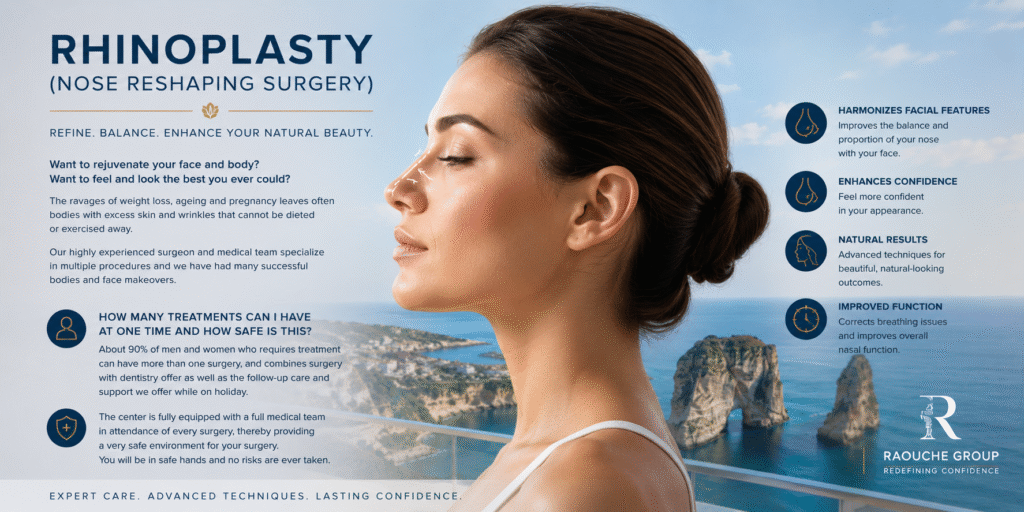
Rhinoplasty (Nose Reshaping Surgery)
Refine Your Profile. Enhance Facial Harmony.
Rhinoplasty, commonly known as nose reshaping surgery, is one of the most sophisticated and personalized procedures in facial plastic surgery. The nose occupies a central position on the face and plays a crucial role in overall facial balance, symmetry, and expression. Even subtle refinements can create a remarkable improvement in facial harmony while preserving each patient's unique identity.
Whether performed for aesthetic enhancement, functional improvement, or both, rhinoplasty is designed to reshape and refine the nasal structure while maintaining natural-looking results that complement the patient's facial features.
Why Consider Rhinoplasty?
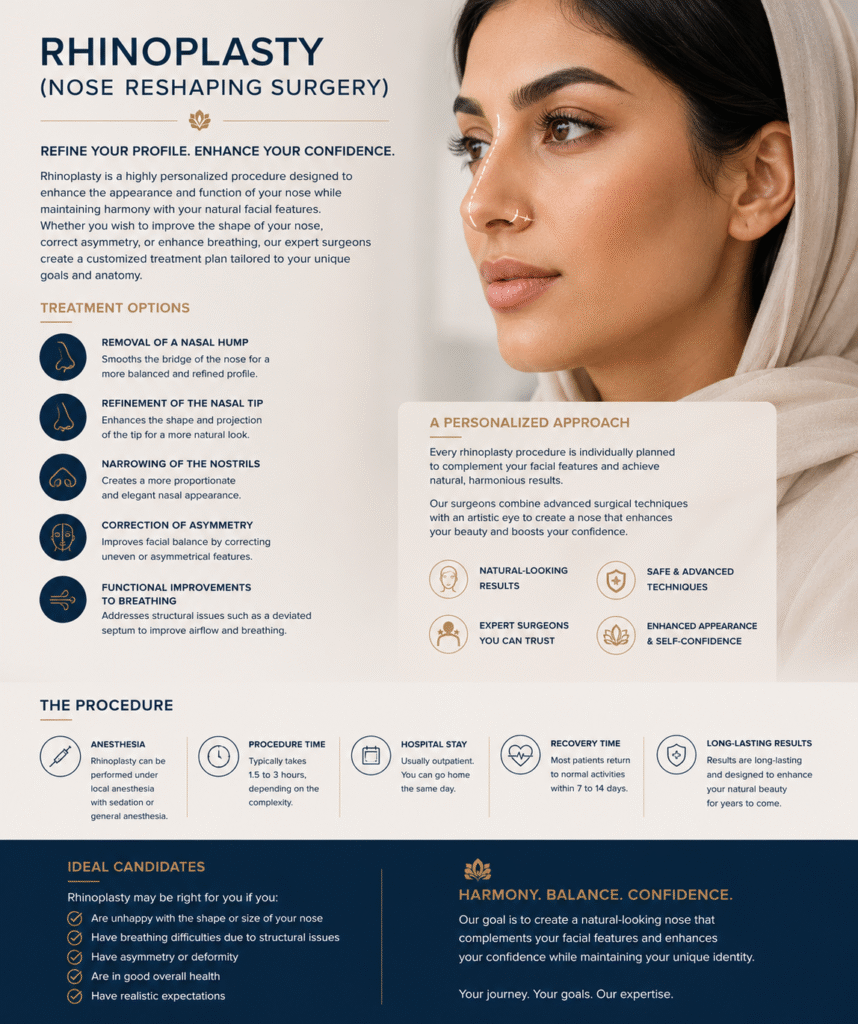
Every nose is unique, and every rhinoplasty procedure should be tailored to the individual. Patients may seek rhinoplasty for a variety of reasons, including:
- Improving facial balance and proportions
- Reducing a prominent nasal hump
- Refining a wide, bulbous, or drooping nasal tip
- Narrowing wide nostrils
- Correcting asymmetry or irregularities
- Reshaping the nose following injury or trauma
- Improving breathing difficulties caused by structural abnormalities
- Correcting congenital nasal deformities
- Revising results from a previous rhinoplasty procedure
The ultimate goal is to create a nose that appears natural, harmonious, and proportionate to the rest of the face.
A Personalized Surgical Approach
At Raouche Group, rhinoplasty is approached as both a science and an art. Careful facial analysis is performed prior to surgery to evaluate the relationship between the nose, chin, forehead, lips, and overall facial structure.
Our surgeons develop a customized treatment plan based on:
- Facial proportions and anatomy
- Skin thickness and nasal structure
- Ethnic and cultural considerations
- Functional breathing concerns
- Individual aesthetic goals and expectations
This personalized approach ensures that the final result enhances facial harmony without creating an artificial or over-operated appearance.
Functional and Aesthetic Benefits
While many patients seek rhinoplasty to improve appearance, the procedure can also provide significant functional benefits.
Aesthetic improvements may include:
- Smoother nasal profile
- Better tip definition
- Improved symmetry
- Enhanced facial balance
- More refined side profile
Functional improvements may include:
- Correction of a deviated septum
- Improved nasal airflow
- Reduced nasal obstruction
- Easier breathing during daily activities and sleep
- Enhanced overall quality of life
For many patients, rhinoplasty offers both cosmetic enhancement and functional restoration within a single procedure.
Types of Rhinoplasty
Depending on the patient's needs, rhinoplasty may be performed using different surgical techniques.
Open Rhinoplasty
This technique involves a small incision placed discreetly between the nostrils, providing the surgeon with maximum visibility and precision. It is often recommended for complex reshaping procedures and revision surgeries.
Closed Rhinoplasty
All incisions are hidden inside the nostrils, resulting in no visible external scar. This approach is commonly used for less extensive modifications and selected aesthetic refinements.
Revision Rhinoplasty
Designed for patients who wish to improve or correct the results of a previous rhinoplasty procedure. Revision cases require specialized expertise due to altered anatomy and scar tissue.
The Surgical Procedure
Rhinoplasty is typically performed under local anesthesia with sedation or general anesthesia, depending on the complexity of the procedure and patient preference.
During surgery, the underlying bone and cartilage structures are carefully reshaped to achieve the desired aesthetic and functional outcome. Advanced surgical techniques allow precise modifications while preserving structural integrity and natural appearance.
The procedure generally takes between one and three hours, although more complex cases may require additional time.
Recovery and Healing
Following surgery, a nasal splint is usually placed to support the newly shaped nose during the initial healing phase.
Patients can expect:
- Mild swelling and bruising around the eyes
- Temporary nasal congestion
- Gradual improvement over the first few weeks
- Return to most daily activities within 7–10 days
Although noticeable improvements are visible shortly after surgery, the nose continues to refine as swelling subsides. Final results typically develop progressively over several months.
Long-Lasting Results
Rhinoplasty produces long-lasting and often permanent results. Once healing is complete, patients enjoy a nose that is better balanced with their facial features while maintaining a natural appearance.
The procedure can significantly enhance self-confidence and facial aesthetics without altering the individual's unique character.
Excellence Through Precision
At Raouche Group, rhinoplasty combines advanced surgical expertise, modern technology, and artistic vision to achieve elegant, natural-looking outcomes. Every procedure is carefully planned and executed with a commitment to safety, precision, and personalized patient care.
A More Balanced Profile. Better Function. Greater Confidence.
\ Get the latest news /